Can you imagine that the world that everyone hears can be quite different?
As a liberal arts student deeply influenced by Marxist materialism, I have never had any doubt about the question of whether consciousness can reflect objective existence. The same sound and the same light and shadow, everyone should see and see it. Let’s go.
Until I tried Nura.
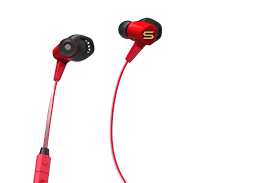
This is a pair of headphones that are said to be able to detect and identify a personal auditory system and to optimize the sound based on the user’s auditory characteristics.
The first to know about Nura is on HAX’s Pre Demo Day. When I first listened to their CEO, Kyle Slater, I didn’t like it very much when I introduced my own products. It sounds very dark. But my own hearing preferences are better. I would rather spend some time playing with it. EQ.
However, the experience of the Nura engineering machine later made me face.
What took me to experience was Nura’s CTO Luke Campbell, who first created a user profile in the Nura App with my name and then let me wear headphones.
The shape of the Nura is not much different from that of a common headset, but the earbuds are a pair of earphones that are similar to the in-ear headphones. After wearing them on the head, the App prompts me to adjust the headphones, which takes me a lot of effort. Adjust the headphones to the proper position.
Later, Luke signaled me to be quiet and then began the auditory testing process. I heard the beeps from low to high-frequency bands in turn, the first few bass bands lasted for a long time, and the high-pitched part was quickly completed, and the whole process took about a minute.
After the test, Luke told me that Nura would generate a personal audio file based on my hearing characteristics and optimize the music played accordingly. Next, I listened to several demo pieces of rock, classical, pop, etc. During the audition, Luke reminded me to switch between my auditory file, his own auditory file, and unoptimized blank file, and understand the different people. The difference in sound after the auditory feature is optimized.
“Creepy” – chilling upright. This is the evaluation that I gave when HAX partner Benjamin Joffe asked Nura to give me the feeling. It’s obviously like OneRepublic’s Counting Stars, which has heard countless songs. Nura has let me hear the sounds of the instruments and vocals that I have never heard before as if I have never really heard this song. There are ghosts in this pair of headphones.
When switching to Luke’s files and blank files, you can clearly hear the changes in the sound and the gap in the middle, making an inappropriate analogy, just like the difference between wearing glasses and not wearing glasses.
Just as different people have different voices and different color recognition abilities, this physiological individual difference is also reflected in the human auditory system. The sensitivity of each person’s auditory system to sounds of different frequencies varies greatly, and the identifiable loudness of different people’s sounds of the same frequency can be up to 20 decibels.
Nura believes that only by accurately detecting the sensitivity of each person’s auditory system at different frequencies, it is possible to optimize the sound in a targeted manner to maximize the fullness of the range and restore the original sound.
The technical principle that Nura uses to detect human auditory system characteristics is called otoacoustic emission (OAE).
When the external sound wave enters the inner ear and causes the cochlear basement membrane to vibrate, the outer hair cells with the corresponding frequency characteristics will produce an active contraction reaction, and the vibration wave will be reversely propagated to the outer ear canal through the ossicular chain and the tympanic membrane. By receiving and analyzing these reverse vibration waves, it is possible to understand the functional state of the outer hair cells of the cochlea.
This technology has been used in the medical field to check newborn hearing, and Nura used it for the first time on headphones.
Since each person’s auditory features are almost unique like a fingerprint, Nura can identify who is wearing the headset within two seconds of wearing the headset, automatically selecting the corresponding auditory file for playback.
In addition to the primary function of auditory feature detection, the design that combines headphones with in-ear earphones is what makes Nura unique.
On the one hand, this design can better isolate the sound inside and outside the earphone, on the other hand, the low-stress and high-pitched sounds are separately presented, and the low-accent sound is played by the earmuff part to bring a tactile sense of hitting, and the earplug part plays the pure high-pitched sound and the person. Sound, while ensuring the fullness of multiple ranges.
The sound quality of headphones has always been called metaphysics, and I think it is difficult for me to evaluate Nura’s voice from a professional perspective. But the first time I heard the music of “Be Yourself” after the test was completed, the clear sound and the feeling of openness were really amazing.
However, music preferences are also very subjective, and not to mention whether Nura gives the best sound reproduction. In terms of sound preference, some people are crazy about the impact of hitting the eardrum, while others like to hear almost no. Inspiration for the bass.
Therefore, Nura’s attractive place is more than its “one step in place”, which can provide a listening experience far superior to the general headphones in a short time. Nura may not be suitable for some ashes enthusiasts who can plug the audio into the socket to hear the water level of the Gezhouba Hydropower Station. However, for those general music lovers who have a certain pursuit of sound, Nura is based on The personal listening system features a customized music experience that is still very attractive.
Finally, although I feel good about the Nura engineering machine myself, but when faced with a large number of users under a wide range of individual differences, Nura can maintain the accuracy of the detection and the universal adaptability of the optimization algorithm, still have to wait until Nura You can see the answer when you ship in bulk. After all, in the things that have a huge difference in the subjective preferences of sound, it is quite difficult to make most people applaud.

 best noise cancelling earbuds for sleeping